
View from Sapsucker Woods: Forming eBird Asia Partnerships
December 23, 2025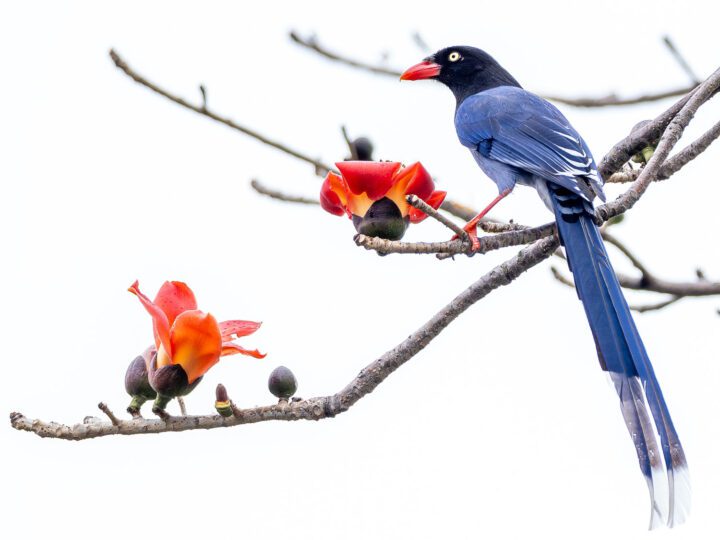
From the Winter 2026 issue of Living Bird magazine. Subscribe now.

Is this a dream? The sun is just emerging over the horizon and I’m in an airport departure gate, peering at giant images of endemic bird species, complete with descriptions of their habitats and conservation. There are even QR codes linking the birds to their eBird profiles.
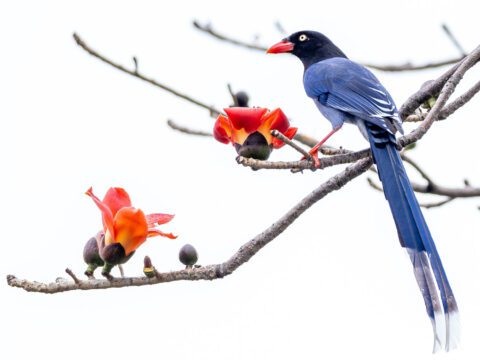
Reality gradually dawns. I’m at Taiwan’s Taoyuan International Airport, starting my journey home after an inspirational week in late October spending time with eBird partners from more than a dozen countries in South and East Asia: learning what they are doing, their aspirations for the future, and how the Cornell Lab can best support their plans. The spectacular airport mural is a manifestation of Taiwan’s national pride in its endemic bird fauna, and the success of eBird Taiwan in building a movement to monitor and conserve those species.
The eBird partners in each country are often at different stages of development, but the ingredients for a thriving project are consistent—a shared vision of a small group of dedicated birders, the formation of a coordinated review team, further coordination by a network of nonprofit and university groups, public engagement through events and initiatives, establishment of a data analysis team, and relationships with decision-makers to influence policy and management. Hosted by eBird South Korea, the meetings during that week of eBird partners from across Asia sometimes felt like a visit to the future, with talk about deep integration of new technologies, rapid societal change, and a new generation of birdwatchers using apps to activate their local communities.
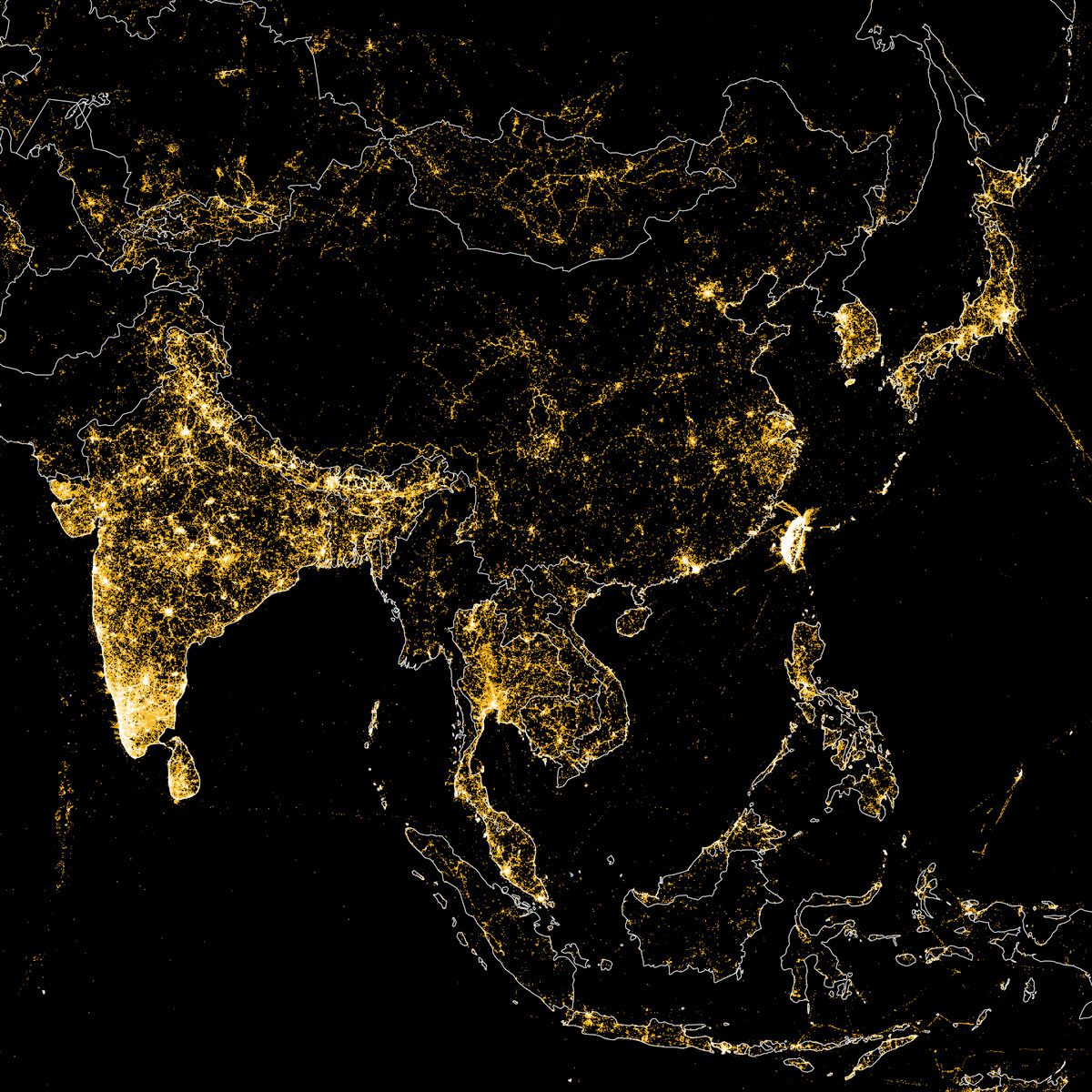
It’s been particularly exciting to hear what the partners want to work on as a group: improving data quality, outreach along the Central Asian and East Asian-Australasian Flyways, and bunting counts. One of the big pushes is to make the Merlin Sound ID smartphone app work as well in Asia as it does in North America and Europe. To do that, Merlin needs to achieve two things at the same time: quickly make a suggestion on what bird is singing, and get it right at least 85% of the time. The key requirements for accurate bird IDs include gathering a big collection of sound recordings (usually about 150 recordings per species) and an expert team of annotators who can identify the species calling in each of those recordings and build the reference library for Merlin.
Across Asia, Merlin Sound ID currently works for 437 species, but we have a good set of recordings for at least another 267 species. We therefore need to annotate those recordings as quickly as we can, while also launching a new initiative to record species for which we don’t yet have enough recordings. In Taiwan and India, where there are particularly active birding communities led by eBird Taiwan and Bird Count India, this approach has worked incredibly well, adding another 66 species to the Merlin Sound ID model in the past year. Based on the partner meeting, the plan now is to extend that approach across Asia, in parallel to similar efforts in Latin America, Africa, and Australasia. If we get it right, this new age of community-driven sound recording will not only bring Merlin Sound ID to communities across the Global South, but open the door to remote acoustic monitoring in the most biodiverse regions of the world. It’s an ambition only made possible by the combination of cutting-edge technology and an incredible network of partners and birders.
When I land in San Francisco on my trip home, I’m surprised to hear the screeching of Red-masked Parakeets as I navigate the renovations at Terminal 3. This is getting very weird! I stop and look around, and realize the temporary walkways are decorated with a mural depicting the ‘Wild Parrots of Telegraph Hill’, with speakers broadcasting a dawn chorus filled with birdcalls and tram bells. I see my fellow travelers looking around as well—and smiling. A powerful reminder of the unique place of birds in human culture, a common language between Asia and America, and among people around the world.
About the Author
Ian Owens is the executive director of the Cornell Lab of Ornithology.

All About Birds
is a free resource
Available for everyone,
funded by donors like you
American Kestrel by Blair Dudeck / Macaulay Library